Friday, August 19, 2016

Summer Camp Week 7

Crash! Bang! Boom! 
The Physics of Sound

During the week, children explored sound in a variety of ways. We learned that sound travels through vibrations. Children felt the vibrations on their own throats when they hummed. We also looked at different ways to create sounds. The class was particularly interested in sound they could make with their bodies and musical instruments. 


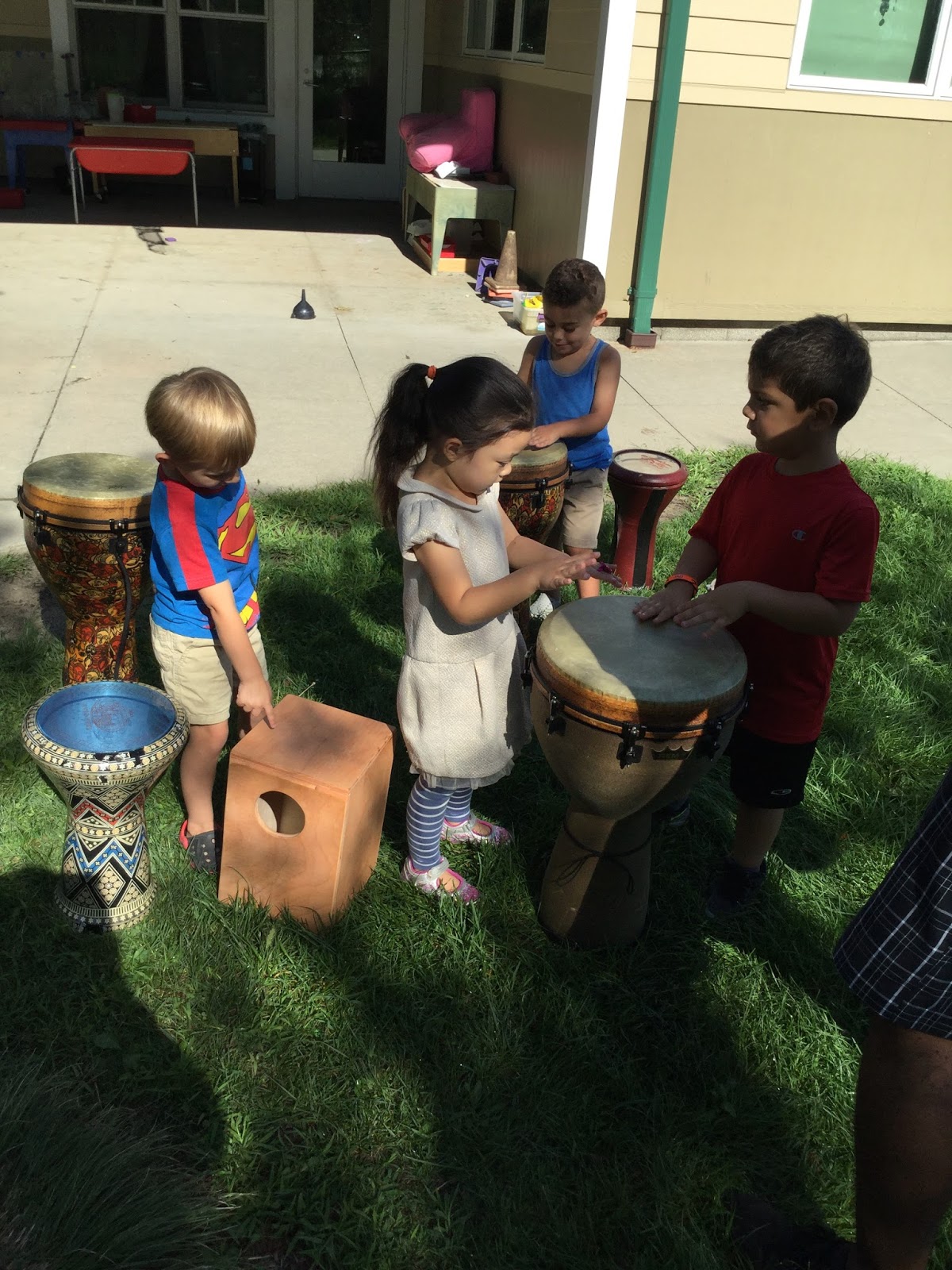
Children were able to work with a drumming expert to explore a variety of large drums


Children using drums, ukuleles, and a finger piano to create a their own band


The class visited a piano in the school and experimented with the different sounds they could make


                                                                                                                                                                                                                                                                                                                                                                                                                                                                                                                                          Children use pots and pans outside to create loud crashes and bangs

While talking and signing into a microphone, children noticed their voices changing


Vibrations from hitting the drum made the small pieces bounce. Children tried different speeds and strengths and watched what changed


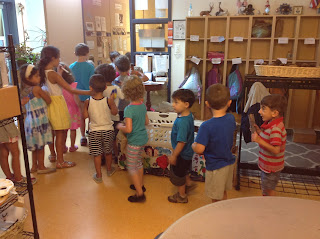
To demonstrate all we learned about sound and music this week, students joined other classes and had a parade throughout the school


Friday, August 5, 2016

Summer Camp Week 4

Where the Wild Things Are!
Studying Animals and their Environments


Each day of this week, we have explored a new group of animals and their habitats!


Day 1: The Savanna

We researched the savanna and learned there are only two seasons- a very wet season and a very dry season. We also talked about the different animals we would see in the savanna. The children were especially interested in the giraffes. This interest inspired us to start working on a project that ended up lasting throughout the entire week! Each day children worked to create a large, 3-D representation of a giraffe. They started by using paper machete to create the giraffe's body parts. Afterwards, they thoughtfully connected each piece to create the giraffe's body and then painted over the newspaper with the glue mixture. 


John and Zayn using paper machete
 to create legs for the giraffe


Jad, Emman and Emily worked
 on creating a savanna with the rock blocks,
 tree blocks and citi blocks.


Day 2: Forests/Woodlands

The children dipped the animals
 paws into the paint.
They compared and contrasted
the animals paw prints. 
To learn about forests, we talked about trees and different animals the children would find in the forest. Some children used a variety of materials to create their own trees. This day was extra special because Science Alive!, a traveling animal group, came to show the school real animals! 
Conner worked on adding branches
 and leaves to the tree trunk.
Jad used the large print books
to learn about different types of animals 
Jad and Conner helped
 Ms. Phee create tree trunks

              
Day 3: The Arctic

As a class, we discussed the different types of animals that can be found in the arctic. We talked about how the animals attributes can help them survive in the cold weather. Many children noticed how arctic animals were white, and had fur or rubbery skin. 


Zayn, Anna and Zayn worked
 on painting the various parts of the giraffe. 
Miles, Zayn, Conner and Jad worked
 on creating a home that would
 keep them warm in the arctic. 


Jad, Emily and Kate explored
the arctic animals in the water table. 


Day 4: The Desert

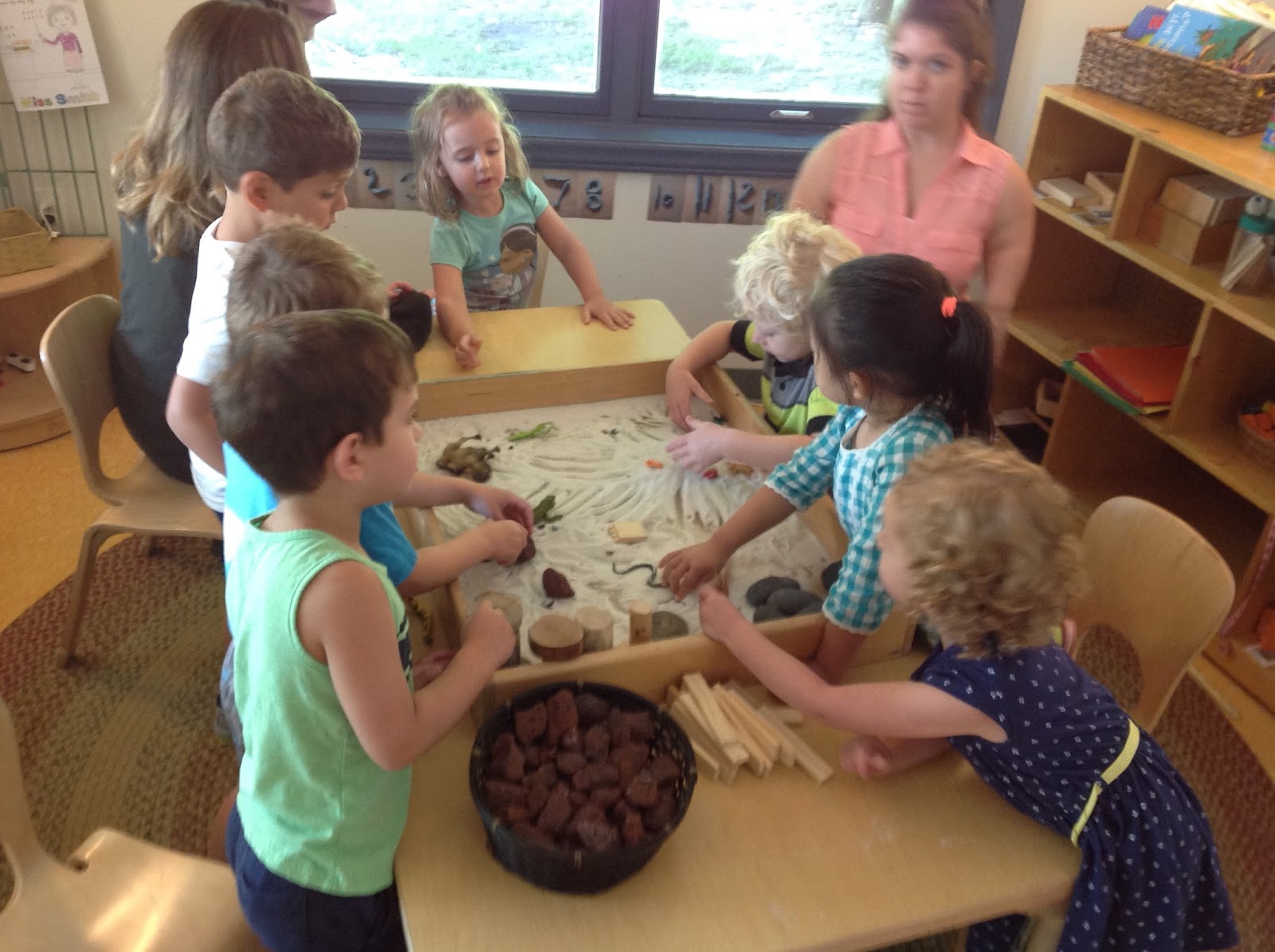
On Thursday, we discussed the animals that make up the desert biome. We watched a video on how snakes travel through the sand. During explorations the children worked on creating their own snake with beads and wire. We provoked the children's thinking about the desert with a sand tray, rocks, and desert animals. 


The children pretended
their animals were in the desert. 
Abby and Miles worked together
 to construct the giraffe. 


Day 5: The Ocean

The children were very excited about exploring the ocean. Many of the children had previous knowledge about the animals in the ocean. We read "Under the Ocean" and discussed the animals that lived near the ocean, in the ocean and on the bottom of the ocean floor. 
Anna worked on creating a fish with white
 paper, markers and different colored pieces of paper. 

Kate and Emily explored with
the ocean animals in water table. 

Abby and Ella did some whale
watching with their binoculars. 
Ella, Abby and Anna
 worked on painting
the spots on the giraffe. 


Tuesday, May 24, 2016

Week in Review May 16th - 20th

Week in Review May 16th - 20th


Butterfly Update

Last week the children observed and drew the caterpillars. On Monday, we noticed they had made a big change! The caterpillars all went into their chrysalises to prepare for their next change. We discussed how they looked and asked for the children's predictions about what would happen. We also did some research and read about the process caterpillars go through. Some children were focused on the changes the caterpillars would experience and some were excited to see them fly. They were able to observe the chrysalis and draw what they saw. Everyone is excited to see what they will look like on Monday!


Early Learning Expectations Met:
1.       1.  Creativity-Imagination-Visualization. Children demonstrate a growing ability to use originality or vision when approaching learning; use imagination, show ability to visualize a solution or new concept.
  2. Initiative-Engagement-Persistence Attentiveness. Children demonstrate the quality of showing interest in learning; pursue learning independentl
  3.  Visual Arts. Children show how they feel, what they think, and what they are learning through experiences in the visual arts.
  4.  Aesthetic Appreciation. Children develop rich and rewarding aesthetic lives.
1.        5.  Spoken Language: Expressive. Children develop abilities to express themselves clearly and communicate ideas to others.
2.        6.  Spoken Language: Receptive. Children grow in their capacity to use effective listening skills and understand what is said to them.
           7.  Fine Motor Development. Children experience growth in fine motor development and use small muscles to improve a variety of fine motor skills both in structured and unstructured settings.
1.       8. Observation and Inquiry. Children develop positive attitudes and gain knowledge about science through observation and active play.
2.      9.  Living and Non-living Things. Children show a beginning awareness of scientific knowledge related to living and non-living things.
3.      10. Knowledge about the Earth. Children show a beginning awareness of scientific knowledge related to the earth.

Transferring Water

During group time, we gave the children a problem to solve. There were two water tables outside. One was full, and one was empty. Their challenge was to move the water from the full table into the empty table. They told us their ideas about what tools and strategies they would use. Small groups went outside and used basters, scoops, spray bottles, and sponges to fill the empty water table. They all practiced their problem solving and cooperation. 


Early Learning Expectations Met:
1.       1.  Creativity-Imagination-Visualization. Children demonstrate a growing ability to use originality or vision when approaching learning; use imagination, show ability to visualize a solution or new concept.
 2. Initiative-Engagement-Persistence Attentiveness. Children demonstrate the quality of showing interest in learning; pursue learning independently.
 3.: Curiosity–Inquiry-Questioning Tinkering-Risk Taking. Children demonstrate an interest and eagerness in seeking information (e.g., be able to see things from a different perspective, fiddling with something to figure it out or attempting a reasonable solution).
4.       4.  Resilience-Optimism-Confidence. Children demonstrate the capacity to cope with change, persist, move ahead with spirit, vitality and a growing belief in one’s ability to realize a goal.
5.       5.  Reasoning-Problem Solving-Reflection. Children demonstrate a growing capacity to make meaning, using one’s habits of mind to find a solution or figure something out.
6.       6.  Participation-Cooperation-PlayNetworking-Contribution. Demonstrate increasing ability to be together with others, in play or intellectual learning opportunities and/or making positive efforts for the good of all; join a community of learners in person and digitally as appropriate.
1.     7.  Spoken Language: Expressive. Children develop abilities to express themselves clearly and communicate ideas to others.
2.     8.  Spoken Language: Receptive. Children grow in their capacity to use effective listening skills and understand what is said to them.
         9.   Relationships with Others. Children develop healthy relationships with other children and adults
         10. Body Control and Activity. Children increase their ability to understand and control their bodies and learn that regular physical activity can enhance their overall physical, social, and mental health
         11. Gross Motor Development. Children experience growth in gross motor development and use large muscles to improve a variety of gross motor skills in a variety of both structured and unstructured and planned and spontaneous settings.
         12.  Fine Motor Development. Children experience growth in fine motor development and use small muscles to improve a variety of fine motor skills both in structured and unstructured settings.
          13. Positive Activity. Children participate in activities that encourage self-motivation, emphasize cooperation, and minimize competition.

Walking on Stilts

We introduced a new way of moving to the children this week. Walking on stilts! The children used small bucket stilts and experimented with how to walk on them. At first, students had to practice and test different ways of using them. Once they understood how to use them, they were able to walk all around. We noticed the children being interested in how tall they were and how their perspective changed with just a few extra inches.


Early Learning Expectations Met:
1.  Creativity-Imagination-Visualization. Children demonstrate a growing ability to use originality or vision when approaching learning; use imagination, show ability to visualize a solution or new concept.
2.       2. Initiative-Engagement-Persistence Attentiveness. Children demonstrate the quality of showing interest in learning; pursue learning independently.
3.        3.  Curiosity–Inquiry-Questioning Tinkering-Risk Taking. Children demonstrate an interest and eagerness in seeking information (e.g., be able to see things from a different perspective, fiddling with something to figure it out or attempting a reasonable solution).
4.       4.  Resilience-Optimism-Confidence. Children demonstrate the capacity to cope with change, persist, move ahead with spirit, vitality and a growing belief in one’s ability to realize a goal.
5.       5. Reasoning-Problem Solving-Reflection. Children demonstrate a growing capacity to make meaning, using one’s habits of mind to find a solution or figure something out.
           6. Gross Motor Development. Children experience growth in gross motor development and use large muscles to improve a variety of gross motor skills in a variety of both structured and unstructured and planned and spontaneous settings.
       7.: Body Control and Activity. Children increase their ability to understand and control their bodies and learn that regular physical activity can enhance their overall physical, social, and mental health.


Painting with Crazy Brushes

This week students tried a new way of painting. They used paintbrushes that were attached to masks and hats. They tried them on and tested different ways of making marks on their paper. Children noticed it was harder to paint this way because they had less control over the brushes. They tried moving their heads up and down, back and forth, and all around to paint different pictures.


Early Learning Expectations Met:
1.       1.  Creativity-Imagination-Visualization. Children demonstrate a growing ability to use originality or vision when approaching learning; use imagination, show ability to visualize a solution or new concept.
2.       2 Initiative-Engagement-Persistence Attentiveness. Children demonstrate the quality of showing interest in learning; pursue learning independently.
3.        3.  Curiosity–Inquiry-Questioning Tinkering-Risk Taking. Children demonstrate an interest and eagerness in seeking information (e.g., be able to see things from a different perspective, fiddling with something to figure it out or attempting a reasonable solution).
4.       4. Resilience-Optimism-Confidence. Children demonstrate the capacity to cope with change, persist, move ahead with spirit, vitality and a growing belief in one’s ability to realize a goal.
5.       5.  Reasoning-Problem Solving-Reflection. Children demonstrate a growing capacity to make meaning, using one’s habits of mind to find a solution or figure something out.
          6: Visual Arts. Children show how they feel, what they think, and what they are learning through experiences in the visual arts
          7. Aesthetic Appreciation. Children develop rich and rewarding aesthetic lives.


Monday, May 16, 2016

Week in Review May 9th-13th

Planting Seeds


The children have noticed changes outside and are talking about new plants growing. To help them understand this process further, we gave them the materials to grow their own plants. We talked about what a plant needed to grow and what steps we would follow to be planters. The students knew that plants needed dirt, water, and sunshine. We gave them the materials and they added the dirt and grass seed into small cups. They watered all of their seeds as well. The class has continued to care for the grass and are eager to see it sprout.

Early Childhood Standards of Quality Met: 
1.       1.Early Learning Expectation: Initiative-Engagement-Persistence Attentiveness. Children demonstrate the quality of showing interest in learning; pursue learning independently.
  2. Early Learning Expectation: Curiosity–Inquiry-Questioning Tinkering-Risk Taking. Children demonstrate an interest and eagerness in seeking information (e.g., be able to see things from a different perspective, fiddling with something to figure it out or attempting a reasonable solution).
            3. Early Learning Expectation: Fine Motor Development. Children experience growth in fine motor development and use small muscles to improve a variety of fine motor skills both in structured and unstructured settings.
1.       4.Early Learning Expectation: Observation and Inquiry. Children develop positive attitudes and gain knowledge about science through observation and active play.
2.      5. Early Learning Expectation: Living and Non-living Things. Children show a beginning awareness of scientific knowledge related to living and non-living things.
3.      6. Early Learning Expectation: Knowledge about the Earth. Children show a beginning awareness of scientific knowledge related to the earth.

Observing and Drawing the Caterpillars

This week we introduced caterpillars to the class. We talked about what they looked like, how they moved, and what was in their home during group time. Afterwards, children were able to watch and observe the caterpillars up close. They noticed the caterpillars looked similar to worms and had "pokey things" all over their body. We talked about how we could draw them. The children each represented the caterpillars using lines and shapes in different ways. We will continue to observe and draw the caterpillars as they grow and change.

Early Childhood Standards of Quality Met:
1.       1.Early Learning Expectation: Initiative-Engagement-Persistence Attentiveness. Children demonstrate the quality of showing interest in learning; pursue learning independently. 
2.        2. Early Learning Expectation: Curiosity–Inquiry-Questioning Tinkering-Risk Taking. Children demonstrate an interest and eagerness in seeking information (e.g., be able to see things from a different perspective, fiddling with something to figure it out or attempting a reasonable solution)
           3. Early Learning Expectation: Visual Arts. Children show how they feel, what they think, and what they are learning through experiences in the visual arts
           4. Early Learning Expectation: Aesthetic Appreciation. Children develop rich and rewarding aesthetic lives.
           5. Early Learning Expectation: Fine Motor Development. Children experience growth in fine motor development and use small muscles to improve a variety of fine motor skills both in structured and unstructured settings.
1.       6.Early Learning Expectation: Observation and Inquiry. Children develop positive attitudes and gain knowledge about science through observation and active play.
2.      7. Early Learning Expectation: Living and Non-living Things. Children show a beginning awareness of scientific knowledge related to living and non-living things.
3.      8. Early Learning Expectation: Knowledge about the Earth. Children show a beginning awareness of scientific knowledge related to the earth.

Problem Solving with Ice

Our classroom is full of excellent problem solvers! We froze some of the classroom materials into large pieces of ice. We put them in the water table and the children used a variety of tools to try and release them. Some of them wanted to hit the ice with tools while others used spray bottles and cups of water to try and melt the ice. Each problem solver learned they had to be patient and try several different ideas before they could successfully release the materials. 


Early Childhood Standards of Quality Met:
1.       1.Early Learning Expectation: Initiative-Engagement-Persistence Attentiveness. Children demonstrate the quality of showing interest in learning; pursue learning independently. 

2.        2. Early Learning Expectation: Curiosity–Inquiry-Questioning Tinkering-Risk Taking. Children demonstrate an interest and eagerness in seeking information (e.g., be able to see things from a different perspective, fiddling with something to figure it out or attempting a reasonable solution).
1.       3. Early Learning Expectation: Reasoning-Problem Solving-Reflection. Children demonstrate a growing capacity to make meaning, using one’s habits of mind to find a solution or figure something out.
2.       4. Early Learning Expectation: Participation-Cooperation-Play Networking-Contribution. Demonstrate increasing ability to be together with others, in play or intellectual learning opportunities and/or making positive efforts for the good of all; join a community of learners in person and digitally as appropriate.
         5. Early Learning Expectation: Fine Motor Development. Children experience growth in fine motor development and use small muscles to improve a variety of fine motor skills both in structured and unstructured settings.
1.       6.Early Learning Expectation: Observation and Inquiry. Children develop positive attitudes and gain knowledge about science through observation and active play.
2.      

Monday, May 2, 2016

Week in Review: April 11th- 15th


Week in Review: April 11th- 15th 

Drawing the head of the giraffe 

In the art studio, Mrs. Roy (the art teacher) has been exploring sculpting the giraffe out of clay with the children. To strengthen the children's understanding of the giraffe, we took a closer look at the various features that make up the giraffe's head such like it's horns, eyes, nose, mouth and ears. Many of the children started their drawing with an oval for the giraffe's face and then proceeded to add more features. Some of the children noticed how their was hair on giraffe's face especially its horns, eyes and chin. 

Early Childhood Standards of Quality: 
1.       1. Early Learning Expectation: Creativity-Imagination-Visualization. Children demonstrate a growing ability to use originality or vision when approaching learning; use imagination, show ability to visualize a solution or new concept.

v1. Early Learning Expectation: Visual Arts. Children show how they feel, what they think, and what they are learning through experiences in the visual arts.
v
6. Early Learning Expectation: Fine Motor Development. Children experience growth in fine motor development and use small muscles to improve a variety of fine motor skills both in structured and unstructured settings

1.      2. Early Learning Expectation: Living and Non-living Things. Children show a beginning awareness of scientific knowledge related to living and non-living things.


Exploring the Pendulum 

In the gross motor room, the children explored the pendulum. We provoked the children's curiosity by hanging a long piece of twine with a ball at the end of it to the ceiling. The children explored the different ways they can move the pendulum. After exploring the pendulum, the children discovered they could push the ball, throw the ball and spin the ball. The children noticed when they pushed the ball, the ball would travel out in front of them and then come back toward their body. When they threw the ball, the ball would often rotate around the child. 


Early Childhood Standards of Quality: 

1.       1.Early Learning Expectation: Observation and Inquiry. Children develop positive attitudes and gain knowledge about science through observation and active play.

  5. Early Learning Expectation: Gross Motor Development. Children experience growth in gross motor development and use large muscles to improve a variety of gross motor skills in a variety of both structured and unstructured and planned and spontaneous settings.

  4. Early Learning Expectation: Body Control and Activity. Children increase their ability to understand and control their bodies and learn that regular physical activity can enhance their overall physical, social, and mental health.
 5. Early Learning Expectation: Reasoning-Problem Solving-Reflection. Children demonstrate a growing capacity to make meaning, using one’s habits of mind to find a solution or figure something out.
1. 6. Early Learning Expectation: Participation-Cooperation-PlayNetworking-Contribution. Demonstrate increasing ability to be together with others, in play or intellectual learning opportunities and/or making positive efforts for the good of all; join a community of learners in person and digitally as appropriate.


Creating Fruit Salad 

As a class, we worked together to create a fruit salad.  At group time, we developed a recipe for the fruit salad. The recipe goes as follows: cut fruits, place them in the bowl, mix, and then eat. We placed apples, melon, strawberries, pineapple, and bananas on the table for the children to add to the fruit salad. The children placed the fruit of their liking onto their plate and used a dull knife to cut it into smaller pieces. Once all the fruit was cut we placed the fruit into a bowl. Each child took a turn at mixing the fruit salad. Lastly, we served ourselves fruit salad and enjoyed our efforts.


Early Childhood Standards of Quality: 

1.       2.Early Learning Expectation: Initiative-Engagement-Persistence Attentiveness. Children demonstrate the quality of showing interest in learning; pursue learning independently
1.       6. Early Learning Expectation: Participation-Cooperation-PlayNetworking-Contribution. Demonstrate increasing ability to be together with others, in play or intellectual learning opportunities and/or making positive efforts for the good of all; join a community of learners in person and digitally as appropriate.
1.       7. Early Learning Expectation: Respect for Self and Others — Mental and Behavioral Health. Children exhibit a growing regard for one’s mind and capacity to learn; demonstrate the capacity of consideration for others; show a growing capacity to self-regulate and demonstrate self-efficacy.
6. Early Learning Expectation: Fine Motor Development. Children experience growth in fine motor development and use small muscles to improve a variety of fine motor skills both in structured and unstructured settings.